Ontological Coaching

Ontological Coaching is an approach to living and working well and developing a life of deep satisfaction, meaning and fulfillment as what is known as “Ontology of the Human Observer”. It is based on a new deeply grounded and practical understanding of language, moods and conversations for behavioral and cultural transformation, while expanding a more resourceful way of being.

Our world contains constant changes going on around us.  Every day we are faced with many relentless challenges; some we have become accustomed to overcoming quickly, and others which take us a bit more by surprise.

Ontological coaching seeks to support you to be more flexible in your thinking, communications, and behaviors by not just observing what is going on around you,  by gently inviting you to consider making steps in exploring new ways of acting; having a more constructive influence on how you respond and react to those various life shifts.

Your Coach will not tell you how to be as a person, or how to behave, but rather help support you and assist you in discovering or identifying what you truly desire.  This type of coaching offers you a framework to living an authentic and fulfilling life with personal accountability.

www.vitalability.com

Fall Into Change Through Accountability

Did you know that people tend to achieve more, in a more sustainable way, when they’re in a positive state both psychologically and physically? Did you know this takes personal accountability?

A life coach helps you stay accountable to your goals. Don’t know what your goals are? That’s okay. A coach can encourage you to create goals if you don’t have them. When we think of goals, you want to make sure that not only are the goals realistic, but your timeline to accomplish those goals are realistic as well. Through this process, you will begin understanding your motivations, what makes you feel passionate, what inspires you, what you love – as this is what will keep you moving and shaking.

Just the act of being able to have someone to be accountable to, or to tell about your goals can significantly impact and improve the likelihood you’ll achieve those goals, and learn what is holding you back from getting your end result. Having an accountability partner can help you go beyond your comfort zone and “fall into change” by tracking your action plans and your effort to put the work in to manage those transitions.

No worries, your coach will be right there to help encourage you and support you through those transitions. The nice thing about working with a coach is that they are not personally affected by your change, so can offer an impartial view of things.  What are your values, desires, passion, and hopes for the future? Have you done an accurate assessment of who you really are? Like, really looked at yourself?

We all go through seasons of change and transitions. Sometimes we may be stuck, sometimes we aren’t stuck at all, but just need some clarity. Sometimes, we know exactly what we want and just need that support system to help us get there. Let’s get to the heart of helping you in becoming a better version of yourself.

www.vitalability.com

Emotional Intelligence (EQ) Coaching

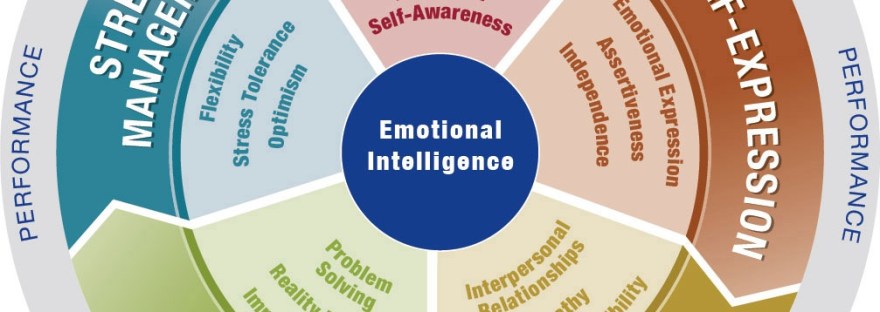
Let break it down. Let’s start with defining emotional Intelligence. What is emotional Intelligence? Emotional Intelligence (EQ) can be defined as a set of social and emotional skills that help us function effectively.

What is EQ Coaching? EQ coaching is a way to improve your emotional/relational skills, and helps you to develop those skills. EQ Coaching helps you expand the capacity to be aware of, control, and express one’s emotions, and to handle interpersonal relationships judiciously and empathetically.

We know that EQ skills, like optimism, flexibility, and empathy (among others), play a major role in the success of individuals, organizations, teams, and groups of various sizes. One of the best ways to improve emotional intelligence is with coaching. Research shows that consistent one-to-one coaching sessions will ensure your continued progress towards reaching your goals. Some of the things that can be explored with your coach is helping to manage and sometimes, even remove, roadblocks such as fear, procrastination, or perfectionism

Coaching begins with an assessment. 

An assessment provides objective information that can enhance self-awareness, as well as awareness of others and their circumstances; provide a benchmark for creating coaching goals and actionable strategies; and offer a method for evaluating progress.

The assessment is statistically valid and scientifically accurate. Along with the support of your coach, you will learn where you score in all competencies, choose the areas of growth that you desire, and then create a plan to develop the competencies and improve those leadership qualities you may be trying to develop or even strengthen.

www.vitalability.com

Take The Leap

What are you waiting for?

It’s time to have a conversation about your future. It’s time to gain that clarity and clarify the direction that inspires you to optimize your performance by meeting those goals.

Let’s collaborate, get that motivation shaken up a bit, and have a conversation about some techniques and action plans that will inspire a strategy that facilitates success and improves your overall feeling about that next chapter in your life.

No more excuses. Now is the time to take the leap.

Reach out here for your FREE 30 minutes consultation

www.vitalability.com

A Listening

Hello America. Systematic oppression and inequality are not right! I know you’re feeling hurt, angry, outraged, anxious, full of grief, exhausted, overwhelmed, fed up, divided, and at risk.

We are here to listen.

Please note that by working with any of our Coaches we will be respectful of other people’s race, sexuality, national origin, gender identity, religion, physical abilities, and any other identifying characteristics. We ask that when in session with us, you do the same.

I want to encourage you to contact Vital Ability, LLC and be assured that working with any of our Coaches will be done in a hate-free violence-free zone. We will not participate in nor endorse any kind of hateful speech regarding indviduals and groups of people.

We do support and endorse advocacy, empowerment, civility, personal responsibility, authenticity, engagement and service in a desire to improve one’s own self and move forward successfully towards accomplishing your own personal goals for your life.

www.vitalability.com

Pandemic Reflections

Its important to be gentle with yourself and with others. We all have our own experiences and our own perceptions of a situation. Sometimes, utilizing a Life Coach can help a person gain clarity and a different way of looking at things.

WE ARE NOT IN THE SAME BOAT …

I heard that we are all in the same boat, but it’s not like that. We are in the same storm, but not in the same boat. Your ship could be shipwrecked and mine might not be. Or vice versa.

For some, quarantine is optimal. A moment of reflection, of re-connection, easy in flip flops, with a cocktail or coffee. For others, this is a desperate financial & family crisis.

For some that live alone they’re facing endless loneliness. While for others it is peace, rest & time with their mother, father, sons & daughters.

With the $600 weekly increase in unemployment some are bringing in more money to their households than they were working. Others are working more hours for less money due to pay cuts or loss in sales.

Some families of 4 just received $3400 from the stimulus while other families of 4 saw $0.

Some were concerned about getting a certain candy for Easter while others were concerned if there would be enough bread, milk and eggs for the weekend.

Some want to go back to work because they don’t qualify for unemployment and are running out of money. Others want to kill those who break the quarantine.

Some are home spending 2-3 hours/day helping their child with online schooling while others are spending 2-3 hours/day to educate their children on top of a 10-12 hour workday.

Some have experienced the near death of the virus, some have already lost someone from it and some are not sure if their loved ones are going to make it. Others don’t believe this is a big deal. Others don’t believe it’s real.

Some have faith in God and expect miracles during this 2020. Others say the worst is yet to come.

So, friends, we are not in the same boat. We are going through a time when our perceptions and needs are completely different.

Each of us will emerge, in our own way, from this storm. It is very important to see beyond what is seen at first glance. Not just looking, actually seeing.

We are all on different ships during this storm experiencing a very different journey.

Unknown author

www.vitalability.com

Emotional Freedom Technique (EFT)

EFT stands for Emotional Freedom Techniques

EFT is a practical self-help method that involves using the fingers to gently tap on the body’s acupuncture points along the meridian lines of Chinese medicine. It is often referred to as ‘EFT Tapping’ or simply as ‘Tapping’. The therapeutic effects of this technique are recognized around the world.

EFT tapping is an alternative treatment for certain emotional and physical conditions. Some research indicates that it may be effective for anxiety, depression, emotional turmoil, PTSD, and some other conditions.

There have been relatively few studies on EFT, but the body of research has grown in recent years.

In addition to the studies that evaluate EFT on people with both anxiety and depression, other research focuses on EFT for those with depression  or PTSD alone.

In a 2013 study, 30 veterans who received EFT treatment along with standard care had significantly less psychological distress and PTSD symptoms than those who were on a waiting list for treatment.

In addition, after three and six sessions, 60.0% and 85.7% of these participants respectively no longer met the PTSD clinical criteria. At 6 months after the treatment, 79.5% of participants did not fit the criteria, which the researchers said indicated the long term benefits of EFT.

In a 2017 survey of EFT practitioners, most (63%) reported that EFT could resolve even complex PTSD in 10 sessions or fewer. Almost 90% of respondents stated that less than 10% of their clients make little or no progress.

More recently, a 2019 study involving 203 individuals tested the physical reactions and psychological symptoms of people attending EFT workshops. The majority of people that took part were women over the age of 50 years.

The researchers reported that participants experienced significant reductions in anxiety, depression, and PTSD symptoms, as well as in pain levels and cravings. They also reported improvements in happiness.

Physical measures in a subset of participants showed improvements in heart rate, blood pressure, and levels of the stress hormone cortisol.

In other research, students with anxiety reported that EFT helped them feel calmer and more relaxed.

In addition, practitioners often combine EFT with other approaches, including cognitive therapy, which may play a role in the treatment’s success

What is EFT and who uses it?

EFT,  first came to prominence in the 1990s when developer Gary Craig published information about the therapy on his website EFT International dot org.

It involves tapping specific points on the body, primarily on the head and the face, in a particular sequence, on one or both sides of the body at particular spots. While doing this, the person focuses on the issue that they wish to treat.

How does it work?

As with acupuncture and acupressure, tapping involves the body’s energy meridian points, which are a concept in Chinese medicine. Proponents believe them to be areas of the body through which energy flows.

In this theory, blocks or imbalances in the flow of energy lead to ill health. According to EFT advocates, tapping on these meridian points with the fingertips restores the balance of energy to resolve physical and emotional issues.

It can also work in a similar way to mindfulness, as it can draw a person’s attention to their body and breathing. It may serve as a mental distraction from the issues that are causing anxiety or stress.

How to do EFT tapping

People may also be beneficial for a person before an event that they expect to cause stress or anxiety.

To use EFT tapping, follow these five steps:

1. Identify the issue

During this step, the person thinks about the problem that they wish to resolve. They should only choose one issue to focus on at a time.

2. Test the initial intensity

A person should rank the intensity of the issue on a scale of 0–10, with 10 being the worst the issue has ever been. This ranking system allows the person to assess the effectiveness of the tapping at the end of the treatment.

3. The setup

Before beginning each round of tapping, the person should decide on a simple reminder phrase to repeat while tapping the karate chop point. This point is at the center of the fleshy part of the outer hand.

The reminder phrase should acknowledge the issue and convey self-acceptance in spite of it. For example, a person might choose to say:

“Even though I have [issue], I deeply and completely accept myself.”

4. The sequence

During this step, the individual taps on specific points on the body while repeating the phrase that they have chosen. If a practitioner is performing the treatment, they will carry out the tapping.

The tapping points, in sequence, are as follows:

  • top of the head (TOH) — directly in the center of the top of the head
  • beginning of the eyebrow (EB) — the beginning of the brow, just above and to the side of the nose
  • side of the eye (SE) — on the bone at the outside corner of the eye
  • under the eye (UE) — on the bone under the eye, approximately 1 inch (in) below the pupil
  • under the nose (UN) — the point between the nose and upper lip
  • chin point (CH) — halfway between the underside of the lower lip and the bottom of the chin
  • beginning of the collarbone (CB) — the point where the breastbone (sternum), collarbone, and first rib intersect
  • under the arm (UA) — at the side of the body, approximately 4 in below the armpit

When tapping, use two or more fingertips and repeat the tap approximately five times on each point.

While some points have a “twin point” on the other side of the body, it is only necessary to tap on one side. However, individuals can tap these points on both sides if both of their hands are free.

5. Test the intensity again

Again, rank the intensity of the issue on a scale of 0–10. Ideally, this will have improved. Repeat the process until the intensity reaches 0 or plateaus.

www.vitalability.com

New Year Message 2020

Slow down a bit and work on not overthinking.  Find time to rest your body  and your mind.  Healing comes with rest and time.  Healing also comes from pushing forward and keeping the body and mind moving.  The key is learning to set personal limits, boundaries, and pacing yourself.

Set a goal.  It doesn’t matter if it is a small goal or a larger more challenging goal. Take small steps towards your goal.  Each step is one step closer to achieving the end result, whatever that may be for you.  Share yourself with others. 

Never give up HOPE and belief in the greater good.  Allow yourself to see the light despite all of the darkness.

Someone, somewhere, is sitting in the shade today because someone planted a tree. Pay it forward by planting one small kindness at a time, and help cast the shadow of your fears and limitations behind you.

I wish you enough.  Enough love.  Enough pain relief.  Enough progress.  Enough happiness.  Enough joy.  Enough progress.  Enough life.  Enough of all that you need in the New Year.

Happy New Year!!!

www.vitalability.com

Coaching Is For Everyone

Coaching is an opportunity to maximize your performance. It isn’t about doing what is expected of you, it is about connecting you with your passion, helping you build your life around the things you love, the things you want to grow, and see beyond where you are in the current moment.

Coaching helps raise awareness and responsibility. You are never too old to set another goal or dream another dream. The only distance between your dreams and reality is the action steps you take to get there. You don’t have to be accomplished, all knowing, or great to get started. However, you do need to take the leap, make the step, and actually get started to get to that level of greatness to live the life where you find it harder not to see your worth.

Let coaching help you get from where you are, to where you want to be.

To build a strong team, you must see someone else’s strength as a compliment to your weakness; not a threat to your position or authority ~Christine Caine

www.vitalability.com