Breaking The Chains of Procrastination

Procrastination is often confused with laziness, but they are very different. Laziness is when we are able to carry out some activity that we should be carrying out, yet are choosing not do so so because of the effort involved; not working, not doing anything, avoiding to make an effort by all means necessary; showing lack of effort entirely; or  when our motivation to spare ourselves effort, surpasses our motivation to do the right, best, or expected action. Laziness is about avoiding responsibilities completely, and although it is normal for a person to feel lazy from time to time, when it becomes chronic, it may cause harm to one’s professional and personal life.

Procrastination means to postpone one task in favor of another or others which are perceived as being easier or more enjoyable, but that are typically less important or urgent. Further, the procrastinator does make effort and intends to complete the task under they are undertaking, and, often they do eventually complete it, although at a much higher cost to themselves. Procrastination is a result of poor planning, the fear of decision making, sometimes perfectionism, and manifests itself in postponing time-sensitive matters in favor of doing something less stressful and responsible. 

This should not be confused with postponing, though there is a fine line between the two. Postponing something is not procrastinating. Sometimes we may need to postpone something if something more pressing comes up. In order for postponement to amount to procrastination, it has to represent poor or ineffective planning and result in a higher overall cost to the procrastinator. This may include lack of progress, accomplishment, or specific consequences.

Procrastination is a trap that many of us fall into at some point in our lives. It happens. This can make us feel guilty, stressed, or ashamed. It can lead to reduced productivity, lost opportunities, and cause us to miss out on meeting particular deadlines, valuable experiences, or achieving our goals.

While it may be comforting to hear all this and hear that it happens to all of us at some point and time – this should not thrust us into complacency. Just to know that you’re not alone though can be compelling. It can also be sobering to realize just how much it can hold us back.

There are two types of procrastination, chronic and acute. Chronic procrastination has a deep, strong, and permanent psychological cause that may not be so easily eliminated. It can be done, but it takes patience and hard work.

On the other hand, acute procrastination can be caused even by small mood or energy swings throughout the day, or other small psychological triggers which aren’t a steady natural part of your psyche (like having a bad day, for example). Acute procrastination happens as an out-of-the-ordinary behavioral pattern. 

Check out this Article written about the differences between Acute and Chronic Procrastination.

So what can we do about procrastination? Is there any hope to change? Absolutely!!! This is the beauty of being open to personal growth:

  • Awareness. Awareness and self-knowledge are the keys to figuring out how to stop procrastinating. It is helpful to understand the reasons you are procrastinating before you can begin to tackle it. Often times, knowing our true reasons for procrastinating makes it easier to stop.

  • Eliminate Distractions. Limit the number of distractions around you. Working in a quite and calm area can help increase productivity. Turn off the notifications on your phone, or turn your phone off; Have a plan to dedicate a certain amount of time to this project. Manager your time. You may even set a timer. An important concept in time management is that you don’t manage only your time, but also consider your energy levels. 

  • Set Goals. It’s best to start with writing your goal(s) down first. Then establish simple, reachable goals rather than goals that are unrealistic. and if you write it down, follow through no matter what. By doing so you will slowly rebuild trust in yourself that you will really do what you say you will, which so many procrastinators have lost. However, it all starts by writing it all down. That’s right, all of it…small goals, large goals, small tasks, large tasks….all of it. Don’t sabotage yourself though by having unrealistic expectations that you cannot meet.

  • Prioritize. Remember that list we said to make? You can utilize this list to prioritize the things that need your attention first. Address your most critical or time-sensitive assignments first, and work your way down the list. Get the hardest stuff out of the way first thing. This will make everything else feel like it falls into place to be more manageable.

  • Get Organized. You are more likely to procrastinate if you don’t have a set plan or idea in place for accomplishing your goal. Utilize a planner, desktop calendar, or digital tracker to keep track of appointments, project due dates, and other important tasks. By the way, even if you’re organized, you can still feel overwhelmed by a task. Take it slow, but not too slow. Allow yourself to incorporate being flexible.

  • Take a Break. It doesn’t have to be long. Give it 10-15 minutes. A break can increase focus, reduce stress, and help you better retain information. Take a walk, excercise, pamper yourself, dance to some loud music, whatever works for you.

  • Set Deadlines. Get yourself out of the habit by saying “oh I’ll just do it tomorrow” or “later”.

  • Monitor Self-Talk. Talk to yourself in ways that remind you of your goals and replace those old, counter-productive negative habits of self-talk. Instead of saying, “I wish I hadn’t…or “It’s just not possible”…or “I can’t do it” – ” say, “I will …”I am making it possible”….or “I am capable of doing…” The way we speak to ourselves can literally affect the way we move forward with completing a task, and in many ways determines whether we even take steps to begin.

  • Reward Yourself. Rewarding yourself is valuable when you create an incentive to work towards. This can be as simple or as elaborate as you choose. Make sure that after the completed result that you get something out of it (even if that is time to enjoy a favorite hobby, excursion, food, or experience).

  • Hold Yourself Accountable. You and you alone are responsible for the effort you put into completing a project. You are in control of what you do complete or don’t complete in other aspects of your life; if you need help in holding yourself accountable, tell a friend or family member and ask them to check up on your goals, deadlines, and accomplishments. You can even hire a life coach to help as an accountability partner.

I am reminded of a quote that my dad used to tell me from Benjamin Franklin, when I was younger……


www.vitalability.com

Independence Day

Independence fosters a person’s ability to be self-reliant and self-sufficient. Independence is a prime motivator for self-determination and success in life.

In the beginning of our life, our self-esteem and sense of our value is dependent upon our parents’ influence and perception of us and the world. What they say we are worth is what we believe about ourselves. Later, it is our social circles and friends, then society who we let tell us what our life is worth. A person has the ability to choose whether to live by the opinions of others, form their own opinions, or a mixture of the two.

Although we are free to pursue our own dreams, we are still a society that values status. We use titles and college degrees, certifications, employment experiences, money and material things to measure a person’s worth. We often let social standing and what others think of us dictate what our actions are and this influences our self-esteem. However, the rut of getting stuck in this vicious cycle doesn’t have to stay this way. You can learn to develop your own value, to be valuable to yourself. By learning to invest in yourself, be valuable to yourself, gives you the tools necessary to embrace independence.

Independence doesn’t mean you never need other people. It doesn’t mean that you don’t need a support system. It doesn’t mean that you can handle everything all by yourself and never get stuck. It does mean that you maintain your own status quo though. You are in control of the type of help you get and the type of people you get help from. You are in control of whether you are willing to not only be a support for others, but accept support from others. Giving help to someone without encouraging their independence is often worse than not helping at all. When you foster dependency, you are limiting people from their potential. This is the importance of stepping out beyond your comfort zones to allow yourself the freedom to grow, to learn, to change. Fostering that independence can help make life a smoother experience that is more manageable.

It is said that every person has four endowments: self awareness, a conscience, independent will, and creative imagination. Utilizing these gifts, provides us the ultimate freedom. The power to choose (we always have a choice), to respond (not react), to change (change can be liberating). The ability to be independent is something that not everyone possesses, however this is a skill that can be taught. Learning to be independent increases our ability to survive in the world. Learning to support yourself, on your own effort, is fundamental for any success you ever hope to achieve in your life.

The ultimate ideal is to be independent and use that independence to help other people. We are not talking about helping people by making them dependent on you. Though sometimes that can happen without us intending for it to. Helping people by freeing them from their dependencies also helps them build their own self-esteem.

The bottom line is this. Think for yourself. Live your life on your terms. Be willing to give help to others, ask for help when needed; be willing to learn, change, and invest in yourself, and then help others do the same.

It’s time for your Independence Day to begin. Set up a complimentary 30 minute one on one session to explore what’s possible for you.

www.vitalability.com

Say Something Nice Day

Sometimes you have to be kind to others….not because they’re nice, but because you are. ~Anonymous

If you haven’t seen the Disney movie “Bambi”, I highly recommend it. It has a lot of valuable lessons throughout for kids and adults. One the the ones that stands out to me that I have carried through my life was referenced by Thumper, a young rabbit referring to something he learned from his mother…… “If you can’t say something nice, don’t say anything at all.”

This is good advice to live by when speaking to each other and to ourselves.

Putting positive and uplifting speech into action has been the focus of many songs, poems, movies, and books over the years. We can learn a lot from these portable lessons of goodness.

One such call to action was represented as follows:

On July 31, 2011, the president and CEO of the Charleston, South Carolina Speech and Hearing Center, Mitchell Carnell, published a short Amazon book called “Say Something Nice: Be a Lifter!” The book was and is really about the health benefits you receive when you lift others up instead of tearing them down.

In 2006, Carnell’s work in communication and good works was officially recognized when the mayor of North Charleston, South Carolina proclaimed June 1 as Say Something Nice Day in recognition of Carnell’s communication efforts.

The aim of this special day is to fight against unkindness, bullying, and the lack of politeness that dominates society today. The world can be an unpleasant place at times, and if there is something that we really need, it’s a little more nicety and kindness.

This includes being nice to ourselves as well. It’s imperative to appreciate even the little things in our lives. Say something nice to yourself about the things you have experienced in your life; reflect on all of your accomplishments or completed goals (no matter how small). This can make you feel good on the inside. 

Everyone you meet is fighting a battle you know nothing about. Be Kind. Always. ~ Brad Meltzer

www.vitalability.com

Mother May I

Take a twist on an old children’s game and revamp it to enhance some important workplace skills with a group of Teenagers or Adults.

Looking for something fun and interactive to do with your team, workgroup, co-workers, to inspire active listening skills, self-restraint, develop those leadership skills to give instruction, and take on instructions? Looking to participate in some fun healthy competition?

How to play the Mother, May I Game:

  1. Line up each player shoulder to shoulder about a foot apart.
  2. The player who is “Mother” (you can also use Father or Captain in place of Mother) stands in front of the other players.
  3. The “Mother” figure then calls on a person by name and gives them instructions so they can move forward. For instance, “Maxwell, take 2 GIANT steps forward.”
  4. The person who is called on must then say, “Mother, may I?”
  5. The “Mother” then responds either “Yes”, and the person can take the steps forward, or “No” and the person must remain in their place without moving.
  6. If the person makes a move and forgets to ask, “Mother, may I?” then they must go back to the starting line.
  7. If another person takes the steps out of turn, they must also go back to the starting line.
  8. The first person to reach the “Mother” figure, wins!

Twists on the Mother, May I Game: The fun can be ramped up a bit when the person playing the “Mother” role adds their own rules. For example, instead of simple “steps”, “Mother” can ask that the participants waddle, hop, jump or scoot. And all the steps don’t have to be forward – they can be backwards or sideways too, which can help the game last longer.

www.vitalability.com

Fools Paradise

Each year on April 1st, a number of folks celebrate “April Fools Day” by playing tricks, jokes or setting up some form of a hoax. This has been celebrated for several centuries by different cultures, though its exact origins remain a mystery.

Those participating in these events often end up yelling “April Fools!” after they have completed their hopefully harmless innocent subterfuge.

It’s important to stay focused when looking to make changes in one’s life, seek clarification on goals and directions for accomplishing those vital steps which lead us to feeling fulfilled. However, it’s just as important to have humor, a bit of fun, and frivolity in our lives.

Take time to share something lighthearted and fun today with those that you make contact with. Maybe tell a joke, or even set up something silly and surprising that brings no harm to anyone.

It is totally possible to partake in April Fool’s Day without ending up looking like a fool in the end…….then again…..

Let us be thankful for the fools…but for them the rest of us could not succeed. ~Mark Twain

The greatest lesson in life is to know that even fools are right sometimes. ~ Sir Winston Churchill

www.vitalability.com

Making Goals Possible

A goal is an object or an aim that we wish to achieve through action. When we set a goal, we are giving ourselves a target to strive for. Holding onto that end result leads to a more structured, meaningful, purposeful, and productive life.

The 2 most recognized goals are short term goals and long term goals.

Short term goals are the ones that a person will achieve in the near future, usually less than a year. These may be an hourly, daily, weekly, or monthly goal. Accomplishments of these goals, when built on each other, can help you achieve an even greater goal/result. Keep in mind, that in order to be successful at your short term goals, they have to be believable and achievable.

Long term goals are ones that a person will achieve as they advance through the different stages of their life and life experiences; these goals usually are set for a time that goes well beyond one year. Perhaps something you hope to achieve, in let’s say…the next 18 months. You can even place your 5, 10, 20 year goals…or beyond…under long term goals.

Tracking progress with your goals can be a game changer. When you measure progress while working towards a specific goal, you will be able to see that though you might not be, in this moment, where you are wanting to get, or visualizing yourself being, you will be able to see over time, that you have made movements in the right direction. Seeing that personal growth will show you that you are a lot better off than where you began when you first set your initial goal(s).

Before you set a goal, take a closer look at what you’re trying to achieve and ask yourself the following questions: 

  • Is this goal something you truly want? 
  • Is it important enough to pour hours of time and effort into it? 

If you’re not willing to put in the time, it may not be worth pursuing.

A useful way of making goals more powerful is to use the SMART  mnemonic. While there are plenty of variants, SMART usually stands for:

  • S – Specific (or Significant).
  • M – Measurable (or Meaningful).
  • A – Attainable (or Action-Oriented).
  • R – Relevant (or Rewarding).
  • T – Time-bound (or Trackable).

Just don’t think about your goals. Write them down. Once you’ve written your goals down, keep them somewhere visible; put personal goals up on your mirror or near your computer screen as a daily reminder and source of motivation.

Your action plan should include the overall goal you’re trying to meet and all the steps you need to take to get there. Working with a life coach can support your efforts to set and make steps to achieve your gols.

Goal setting gives you a list of manageable steps that you can take in order to take your life from where it is now to where you want it to go both effectively and efficiently.

Your life coach will provide a safe space during your sessions to explore these steps, and help hold you accountable as you work towards your goals.

It’s never too late to set goals for success!

www.vitalability.com

NLP Coaching (Neuro Linguistic Programming)

NLP Coaching is suitable for everyone who wants to make a change, to improve themselves, or generally achieve more in their life. NLP can assist a person in staying motivated longer over longer periods of time, while supporting the person in meeting their goals.

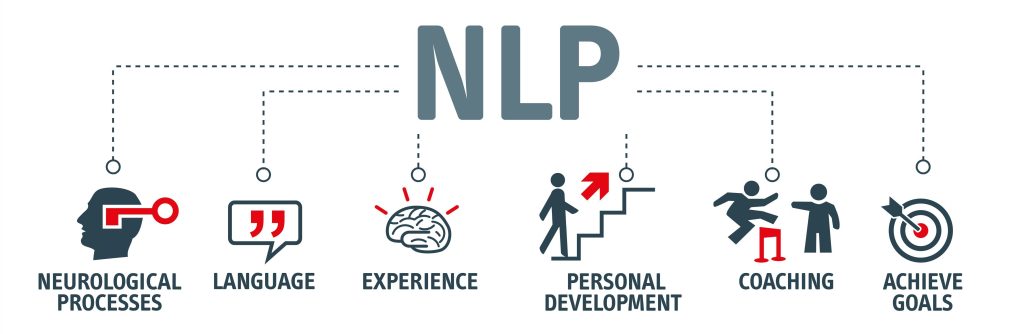
NLP is a results oriented type of Coaching system that focuses on the importance of effective communication. NLP is a supplementary skill for Coaches who utilize this type of training with their clients, to help them reframe their behavior patterns to a more empowering pattern until it becomes a conscious habit.

The “N” stands for Neuro (referring to mind, brain, and body). Neuro incorporates the mental and emotional components of neurology;

The “L” stands for Linguistic (the language of an individual); the language you use to communicate with others and with yourself.

The “P” stands for programming (our mental tapes to ourselves) by being able to use language to help other people tap into a deeper level of empowerment and results for themselves. Programming is the way our past experiences, thoughts, and emotions affect all areas of our lives (thoughts, feelings, reactions, beliefs, and traditions).

You Coach will be able to flow between multiple technique and models, utilizing specific ones as needed throughout each coaching session; NLP is one of those tools that may be utilized in your Coaching sessions.

www.vitalability.com

New Year Message

Happy Holidays. I hope you have had a restful Christmas break; a generous holiday full of love, hope, health, and happiness.

Now we welcome the end of 2020 and the beginning of 2021. A time of renewal, a time of gathering our goals, our vision for our life, and honoring who we have been becoming.

Take this opportunity to work with an accountability partner. Begin by scheduling a complimentary session https://vitalability.com/complimentary-consultation/

www.vitalability.com

Brain Based Coaching

Brain based coaching is a coaching approach rooted in contemporary neuroscience. It consists of the scientific study of the brain and the rest of the nervous system by the Coach. Using the latest insights into how the brain works, brain-based coaching is a new approach which complements and amplifies the principles and practices of coaching to create yet more powerful, positive and transformational changes for the person being coached. This is accomplished by facilitating positive change by first improving the thinking.

Brain-based coaching focuses solely on your direction/agenda. This type of coaching tool pulls out what’s already there inside you. Brain based coaching provides the structure, process to help you apply your best thinking skills and explore various insights. Brain based coaching is self-directed and encourages you to think for yourself. , the coachee.

This type of coaching works for clients as it creates a safe environment that is conducive to greater self-awareness, deeper appreciation of circumstances, new insights, and self-confidence. Brain based Coaching encourages lasting change through solution focused results, and self-directed learning.

www.vitalability.com

Attitude of Gratitude

An Attitude of Gratitude is a regular habit to express appreciation for all different parts of life, no matter how small. An attitude of gratitude means that you operate from a place of abundance instead of a place of scarcity and fear. When we train ourselves to look at life through the lens of gratitude rather than disappointment, we find ourselves happier and more at peace. There is so much to be grateful for if we just learn to look for it. We each have the ability to choose what we focus on.

This doesn’t mean that you are grateful for negative or bad experiences that happen in all our lives. It doesn’t mean you are being fake when you are making an effort to focus on the things you are grateful for. Even on those moments, days, or weeks where it feels like nothing is going your way, going right, or feels overwhelming….it is important to lay that foundation of gratitude and keep it separate and independent of our circumstances. It’s important to give thanks for what IS working…no matter how insignificant it may seem.

When you make it a conscious habit to express appreciation for your life, the Universe listens and responds with more positivity. An attitude of gratitude forces you to get outside of your problems and look at the bigger picture. In exchange, you are better able to bounce forward when challenges occur in life.

Think of something in this moment that you are thankful for? Perhaps even take some time to make a list of those things. This Thanksgiving coming up I challenge you to give thanks in different ways to not just others, but yourself as well. Perhaps you are thankful and have an attitude of gratitude for your values, your abilities, your effort to be your authentic self, and your desire to better yourself.

An attitude of gratitude has the power to transform your entire life.

FUN FACT: Smiling forcibly for only 20 seconds stimulates brain activity associated with positive emotions

www.vitalability.com