Dreamers and Doers

When you are so focused on surviving, it feels like you just can’t dream. Then with this mindset holding you back, time passes as life goes on, and you are one day looking at yourself and realizing, you are there…..left in the same place that you started.

I want to encourage you to shift your focus from just surviving…to giving yourself permission to hope….to want….. to dream.

“Without a vision the people perish” – we’ve all heard this at some point in our lives. Let your dreams guide you and pull you through those tough times. Let them take the good times and make them great. You are never too young, or too old, or too broken to live your dreams.

One day at a time. One step at a time. One moment at a time. All it takes is for you to BELIEVE, then STRIVE, then BE.

#vitalabilityllc #hope_tbi #HOPEster

You Can Make A Difference

Want to join me in supporting a good cause?

You can help support transformation opportunities through our community outreach, Pro Bono scholarships, development (of services, workshops and courses), and general operations of Vital Ability, LLC

Whether you donate $5, $50, $500, or $5,000. Every little bit helps. Thank you for your support.

Check out our different pages on our website. You can see all the things we offer under our “Services” tab. As our business and professional community continues to grow, so will the types of services, scholarships, and workshops we provide.

Want to share information about our website with others. Check out our “Social Outreach” page. Watch our videos, and then choose which one you would like to share. Click share arrow on top right of video to get access to the link to share. Feel free to share them all.

We look forward to hearing from you, answering any questions you might have, and being of service.

https://vitalability.com/donations/

Brain Injury Mentor Program

We are pleased to introduce our newest program to all of you. We are currently accepting applications for this robust and supportive opportunity.

While different than our Coaching or Consulting services, this program still aligns with the intent of our business overall. We invite you to learn more about it, share with others who you think might benefit, and reach out with any questions you might have.

The overall goal of the program is to provide an impactful experience to complement whatever a person’s current rehabilitation/treatment plan is, and to assist with helping the client who is looking to reintegrate or reengage with their life, work, an event, and to offer a resource to support them in the ability to move forward with their recovery process by incorporating steps to support organization, additional forms of communication, and establishing routines to help manage cognitive fatigue.

This program is geared towards high functioning brain injury survivors, caregivers, family members, healthcare providers, friends, and anyone in the general community seeking to recover from, or assist in the recovery of a brain injury.

Life Coach Magazine – Featured Coach

I was recently featured in Life Coach Magazine. You can read the full interview here.

https://www.lifecoachmagazine.com/caren-robinson-vital…/

Life Coach Magazine is the premier online magazine for coaches and their clients. It features interviews with inspiring coaches and other professionals, along with articles on everything from becoming a coach and coach certification programs to personal development. Life Coach Magazine’s mission is to connect and inspire those interested in living their fullest lives.

Have A Disability? Don’t ‘Dis…… Your Ability!

Disability does not mean inability. ~ Anonymous

A focus on ability

Any person who has experienced a disabling injury, illness, or trauma (whether temporary or permanent) and is able to be actively involved in the coaching experience, can benefit from working with a coach.

Whether a disability is visible or invisible, a coach can be a valuable addition as an accountability partner assisting their client to face and move beyond specific life challenges and critical moments. A client can benefit from coaching as it assists in managing their re-invented self, while moving forward with their life.

There is also an added benefit to having a coach who has a disability, or that has recovered from one. They are able to fully understand and relate to the struggles, barriers, and the journey of recovery. They have not only survived their own personal trauma, but they are able to share how they have thrived in spite of their challenges.  With that genuine experience, there is no doubt that your coach understands difficulty can relate to some of the hurdles and emotions of that experience, and knows what it takes to overcome complex obstacles. This can allow you to trust the process and get the most from the coaching experience.

How can a coaching session be designed to benefit someone with a disability?

  • designed to help the client improve their own medical communication between themselves and medical professionals, promote empowerment and change the way we define wellness, sickness and healing. Coaching allows you to explore your ability to make clear, direct requests for support and accommodations

  • designed to be a mental and emotional process of supporting a client to unlock their potential, maximize their performance and grow beyond the current circumstances of their condition

  • designed around creating a structure for change, fulfillment, for the sake of enhancing well-being, and recognizing limitations

  • designed to help the client gain greater clarity about if, when, and how to self-disclose about their disability to others

  • designed to help identify and discover a client’s strengths, and confidently face difficult situations while expanding problem solving skills

  • designed to help expand the client’s ability to make clear, direct requests for support and accommodations

  • designed to explore time management skills with the Client

  • designed to help a client to find their own answers and solutions, become more creative, resilient, and adaptive

  • designed to offer space and attentiveness for the client to experience and see themselves authentically and develop their communication skills

Let us help you move from “survivor” to “thriver”.

http://www.vitalability.com

A Little Patience Goes A Long Way

Patience is not the ability to wait, but the ability to keep a good attitude while waiting.

~ Anonymous

We all know that relationships can be difficult. One of the best methods we have for making every relationship less stressful and more enjoyable is to show a little patience.  Patience has been defined as what we lack for the driver in front of us and demand from the driver behind us.

In truth, patience is nothing more than time. Patience enables us to analyze things and situations beyond their face value.

  • Time before we say something: Think of a time when someone was not patient with you when you needed them to be. Think of how you felt. Think of how deeply you might have been hurt. The next time you find yourself losing patience with another, take a moment to remind yourself of how you felt when someone had no patience with you.
  • Time before moaning and groaning: Patience takes time, but no more time than the showing of anger; of stomping or yelling or whining or complaining. A little patience can often resolve a conflict that a loss of patience will only escalate.
  • Time to just let things run their course: Arnold H. Glasow said, The key to everything is patience. You get a chicken by hatching an egg, not by smashing it.î Some things require a certain amount of time. Losing patience only hurts ourselves and won’t speed up the process.

So take the time to smile instead of frown; the time to wink instead of snarl. How much time does it really take to give someone a small nod or a pat on the back? We never stop to think about how a little of our time can make such a big difference in how we make another feel.

He that can have patience can have what he will

~ Benjamin Franklin

We can enjoy the following life-changing benefits by learning how to become patient.

Long-Term Vision

By understanding the importance of having patience we can maintain an unwavering focus on our long-term goals. Temporary setbacks like a delayed promotion, failing to qualify for a tournament or exam, a re-scheduled medical appointment, or enduring train and flight delays don’t affect a patient person much.

Mental And Physical Well-Being

We can see how patience plays an important role in our mental and physical wellness. By understanding the importance of patience in our life, we can learn to stay in control of our emotions and avoids negative feelings such as anger, frustration, helplessness, etc. Patience can be therapeutic and help during rehabilitation processes and various therapies.

Ability To Make A Sustained Effort

Patience gives people the perspective to focus on long-term strategies. You would have noticed that patient people have a reputation for persistence. This is because they work towards their goals despite setbacks and delays. Effort is directly tied to our goals and the the results we get from that effort, or lack of effort.

Sometimes effort might mean just getting out of bed in the morning. It looks different for everyone.

Peace And Popularity

A lack of patience is nothing more than a reflection of ourselves, an exercise in self-control, and maintains a great role in our goals/objectives being achieved. Patience enables us to analyze things and situations beyond their face value. Being patient can help give us inner peace and provide the ability to keep smiling despite challenges.

The lack of patience is the key to so much unhappiness and grief in this world, when all it requires is a little time on our part. One of the simplest ways to build stronger relationships and bring more happiness into our lives is by becoming a little more patient.

Showing someone patience is really giving to another that which we wish to receive.

Patience and fortitude conquer all things.

~Ralph Waldo Emmerson

http://www.vitalability.com

Eating For Life

Nutrition affects our overall health. Food balance is imperative to helping us develop our brains, strengthen our immune systems, and support healing.

Your body is worth the best you can do for it. This means getting proper amounts of sleep, rest, water, and food.

There is a balance to be had in all things, and food is no different. You aren’t going to be able to deal with food or manage your nutrition by pretending that it doesn’t exist, or that you are not responsible for it.

Eating is an essential part of life. We cannot sustain life for long without eating, so it is important that we take the time to learn how to eat well in order to have the best life possible. Our views of eating and the eating practices we adopt will affect our lives and our health in significant ways in the months and years ahead. Eating well can literally change everything.

Eating can be both a blessing and a curse. Many people struggle with eating because they cannot keep it in balance. They end up eating too little or too much and do not live healthy lives because of it. We all know the dangers of eating too little. Probably everyone has at least one friend that struggles with an eating disorder of some kind. That friend just cannot seem to get a grip on their eating patterns and they are unhealthy because of it. They think about or talk about food almost constantly.

Other people struggle with eating too much. Eating more food than we need to live is something that the majority of people, at least in the West, struggle with. Eating is associated with most kinds of social activities and events and therefore people learn to eat for reasons other than to satisfy hunger or prolong their health. Eating becomes a way to experience pleasure or to numb the pains of life.

The bottom line is that whether people struggle with eating too little or with indulging on food too much, they are not using food in ways that are healthy and life-promoting. Eating, while it is definitely meant to bring people pleasure and satisfaction, is primarily to be a means of sustaining a healthy life. Our problems begin anytime eating is neglected or indulged in beyond what is necessary.

Take a look at your eating patterns. You may be surprised to see that you have established unhealthy eating habits over the years. Perhaps your schedule for each day is centered around when you can have meals or a snack. If so, there is a high chance that food has become a bit too high of a priority. Anytime that your thoughts are consumed with food, whether with restraining yourself from it or with consuming more of it, you are thinking of eating and of food in unhealthy ways.

Beginners Guide To Setting A Goal For Healthy Nutritional Eating

If you’re currently not eating a healthy diet, it can be difficult to start such a plan. However, healthy eating along with some exercise is very important for maintaining a good bodily function and goes a long way towards living a disease-free life. If you struggle with healthy eating, then you know that breaking unhealthy habits can be the most difficult part of the process. Therefore, if you truly want to live the best lifestyle possible, it is important to follow tips in order to start eating a more healthy diet.

A great first step when you want to start eating your way to a healthy lifestyle is to rid your home of all temptations that will distract you from following better eating habits. Ideally it would be a wise course to keep junk foods and beverages out of your house so as not be tempted to snack during the day. If you’re worried about getting hungry, keep healthy snacks like carrot sticks, yogurt, fresh fruit, or whole-wheat crackers on hand. If you find that you just cannot bear to toss out the sweets, try keeping something tiny on hand, peppermints or barley sugar. Eating a few, (emphasis on few) of these won’t ruin your diet but also will give you that little sugary fix you rave.

Another great step to healthy eating, when you’re first starting the process, is to take a few moments to learn what foods are the healthiest for you and how they work within the body. To start eating healthily we must begin by thinking healthily. Most people understand that fruits, vegetables, and low-fat meats and dairy products are good for you, but few people understand why. The key is learning about nutrients. When you understand how specific nutrients work and why you need them, it becomes more reasonable for you to make healthier choices for your body. Knowledge really is power!

Preparation is a major key in commencing a new healthy diet. You must take into consideration your schedule for meals. If you often eat in a rushed hurry at odd times of day, you are probably more inclined to grab a rushed meal which will probably do more harm than good. So plan ahead! Instead of grabbing a fast food lunch on the go, take a bagged lunch to work, complete with a healthy wrap and some fresh fruit and vegetables. Remember not to forget your evening meal, a simple plan to have a meal ready before you get home would be perfect, but in our fast paced lifestyle, sometimes this just can’t be done. One way to solve this problem is to plan out your evening meals for the week, on your days off. Perhaps just before you do your weekly shopping. Another warning: when going to the shops, do not venture there hungry because if you’re anything like me, one or two chocolate bars won’t hurt! That becomes the first break in your healthy eating.

Initially many will find it very difficult to make those necessary changes to healthier eating. Along with the difficulty of change, you may not feel well for a short period of time. Usually this is normal as your body is adjusting to your new and improved life style and is cleansing itself from the unhealthy toxins built up from poor eating habits. However if this feeling continues or you are worried a visit to your doctor would be the correct thing to do.

Start with baby steps. Even if you only replace one soda a day with a glass of water, you are really improving your calorie intake. If you eat fast food every day for lunch, try replacing that half of the time with better quality foods. When you start by taking small steps you aren’t cutting out all of the foods you love all at once. By taking your time to learn about your eating habits and slowly replacing them with better meals, by taking the time to learn and understand why you should be doing that and making the necessary changes in an orderly fashion, you will feel much better within yourself physically, mentally and emotionally and well on the road to becoming as healthy as you can be.

So, eat for life – don’t allow to let life eat you. After all, you are worth it!

http://www.vitalability.com

The Choice Between Optimism and Pessimism

The pessimist sees difficulty in every opportunity. The optimist sees the opportunity in every difficulty

~Winston Churchill

When it comes to how we view the world, most of us fall into one of two categories: optimist or pessimist.

According to the world’s foremost expert on optimism, Dr. Martin Seligman, everyone is born optimistic.  And yet, 95% of grownups are pessimists, not optimists.  What goes wrong?  Some people see the glass as half empty.  Others see it as half full.  But is it really as simple as that?  Is it possible to be a bit of both?

When you think about it, most people tend to be an optimist sometimes and a pessimist other times.  Ironically, a lot of times things turn out according to how we feel about the situation.  If a person feels like something will go well or feels optimistic about it, it usually seems to go well. The same is true of the reverse.  When someone feels like something will go badly, it tends to do just that.

Optimism and pessimism are two sides of the same coin. They’re both attitudes or mindsets, but one is positive, while the other is negative.

In the academic world, optimism can be defined as “the extent to which people hold generalized favorable expectancies for their future” (Carver et al., 2010)

Optimism is about more than feeling good; it’s about being engaged with a meaningful life, developing resilience, and feeling in control.  Optimism is a mental attitude that heavily influences physical and mental health, as well as coping with everyday social experiences, relationship dynamics, and work life. 

An optimistic attitude isn’t always that easy to come by. It really takes concentrated effort. Anyone can learn to be optimistic if they find out what their purpose in life is.

An optimist, when faced with a problem, tends to find the upside to the situation and starts figuring out ways to solve that problem, or ways to turn it around.  A pessimist, however, immediately throws up his hands, and yells, “That’s it; it’s all over. I can’t handle this anymore.”  Or he will distance himself from the problem, pretending it doesn’t matter.  This is denial, and it never works.

An indication that you are dealing with a pessimist is in a simple phrase they will use in stressful situations – “I can’t”.  The pessimist is helpless, powerless and it shows in his response.  The optimist responds with – “I won’t”.  The optimist is making a conscious choice, not just reacting.

An optimist prefers to think more positively.  They focus on what they really want, not what might happen to them.

Think about the following statements:

  • Optimists achieve their goals because they never give up
  • Optimists attract Success naturally
  • Optimists are happier, healthier and more energetic than pessimists
  • Optimists are easier to be around, inspiring people around to be positive
  • Optimists live longer and suffer from fewer and less severe diseases
  • Besides the above, optimists lead higher quality of life.

These are all probably true just by the fact that optimists’ positive thinking makes challenging situations “not that bad” after all. 

Now true optimism is not sitting back, thinking positive thoughts, and hoping everything will turn out all right.  It’s how you see the world, positively rather than negatively.  You face each situation, each problem, and each occasion with a positive attitude; and you always look forward to the “benefits” you will derive from it. You have a choice.  “Change your thoughts and change your world,” said Norman Vincent Peale. What it comes down to is that your attitude is a conscious choice.  If you choose pessimism, you’re choosing to see the down side of every situation, judge people unfairly, and live unhappily the rest of your life.  What an oppressive existence!

On the other hand, if you choose optimism, you’re empowering yourself to see the positive side of each challenge, seeing the good in people, helping them to see the good in life too.  Taking action to further improve your own life, and living happily with friends and family who care about you.  Attracting all good to yourself. Choosing to be more optimistic and positive does not mean you won’t encounter difficult times, trauma, loss and many challenges.  What it does mean is that you will have more power on your side to help you through those tough times.  You’ll bounce back faster and make better choices, rather than letting life just wash over you.  You’ll learn to be proactive, instead of reactive.

If you’re not naturally optimistic and positive, don’t worry.  You can learn how to use your thoughts to change your attitude and emotions.  It won’t be easy.  Some days will be very challenging, but you can do it.  Improving your optimism rates is one of the most important actions you can take to improve your life.  It doesn’t come automatically, though.  It takes effort. It takes deliberate, conscious awareness of your thoughts and feelings.  And then acting on that awareness.

Each time you think a negative thought, stop right there and turn it around to find the positive aspect of the situation. Do this each time and build on it.  It will become a habit to be positive and upbeat about your life.

According to a study published in Clinical Psychology Review, optimism is closely linked to resilience. “Optimism has been shown to create physical and mental resilience for people, even those who have been through extraordinarily traumatic life circumstances or medical situations,” says Iyer.

Here are some stating points and things to consider:

Many people compare optimism with happiness. Even though they can influence each other, they aren’t the same thing. Sometimes optimists are see as people who only see the positive in every situation, yet that is not accurate. Positive thinking doesn’t mean you ignore the things that cause you stress in your life. It doesn’t mean that you are happy-go-lucky all the time or don’t experience hardship either. It does mean though, that you are creating an ability to approach and deal with those things in a productive way.

Practice your ‘positive thinking’ and your ‘positive feeling’.  Give yourself permission to think new thoughts and feel new feelings.

You can be as optimistic as you want that you will attract whatever it is you want to focus on.  The productive action helps to push things to that end, and you will get there. 

So I would say to you: Choose to be Optimistic!  Expect the best out of life!  Just Think and Act Optimistically.

www.vitalability.com

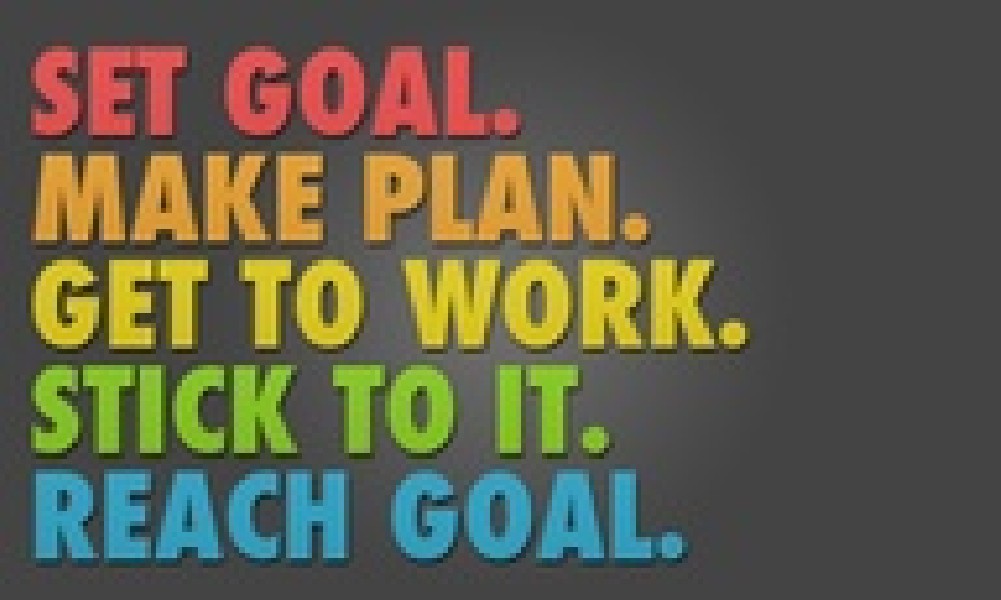
5 Ways To Focus On Goal Setting

Life is nothing but an obstacle course, it’s all about getting through that obstacle course to your desired goal that most people seem to have a problem with. It’s only normal to encounter obstacles in the pursuit of your goal. It helps to look at obstacles as a test to get you to the next level.

However, when these obstacles start to become a nuisance to the point of almost putting a stop to your goal(s); or worse, making you completely abandon your goal, you must take action and think things through.

Here are some helpful, tested pointers that will keep your attention focused in achieving any goal that you put your mind to.

1. Think Positive

This means: Do not quite. Don’t allow yourself to give up. Especially when you are midway working for a specific goal, there should be no room for quitting. Adjusting yes, quitting no.

To quit is tantamount to going back to the starting line of goal accomplishment. That is time, energy, money, and a whole lot of things wasted and lost. It is more costly to quit than to find a solution to the problem, not to mention the frustration one feels.

2. Keep a clear, open and tense-free mind

Always be ready to receive new ideas. Focus and concentrate. Think in a wide scale manner and always be open to new options to eliminate the particular obstacle you are currently dealing with.

3. Persist and Persevere

Be sure to exhaust every possibility, even to the point of trial and error, just to be sure that there is a solution to correct the problem you’re dealing with.

4. Simulate and Visualize

Try to picture inside your head a possible solution to help overcome and/or solve the obstacle that’s setting you back.

5. Ask for Help

If all fails, get assistance from others you know who are more knowledgeable on the work being done. Their suggestions might not necessarily be the exact ones you were hoping to hear, but they may trigger some NEW ideas in finding the right solution to your problem.

www.vitalability.com

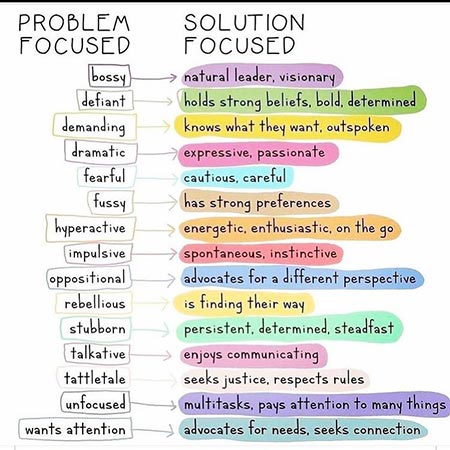
Being Solution-Focused Is A Superpower

I am unapologetically building my life up with those that are supportive of the vision for positivity, self-awareness, and the willingness to take personal accountability for their own choices. Those willing to give more than they take to those around them is a vital ability.

I am solution-focused personally and in business. I am on an amazing path that allows me not only to empower myself, yet empower others also. This includes the ability to live in a state of mindfulness that supports living the best version of myself, and encourages others to do the same.

The mindfulness piece also includes being mindful of creating a bit of distance between myself and those that are negatively infectious.
These folks that have blocked themselves from any kind of self-awareness, personal growth, common decency, are habitually toxic, or lack the fortitude to be personally accountable, are the types of people that tend to have a problem for every solution. They are unapologetically disinterested in putting forth effort to improve themselves or the world around them.

Keep in mind that creating distance doesn’t mean I hate anyone. It isn’t rejection, or sanctimonious posturing…this couldn’t be further from the truth. It does mean though, that I have boundaries and standards. It does mean that I love myself enough to no longer be infected with their toxicity. It means I have chosen to be a positive source of love and light for myself and others interested and willing to receive it.

If you are interested in making an improvement in your life, are looking for an accountability partner, interested in setting or completing goals for yourself, and exploring how a life of being solution-focused can manifest positivity for you, then feel free to reach out to me directly. I am honored to know you.

www.vitalability.com