Its important to be gentle with yourself and with others. We all have our own experiences and our own perceptions of a situation. Sometimes, utilizing a Life Coach can help a person gain clarity and a different way of looking at things.
WE ARE NOT IN THE SAME BOAT …
I heard that we are all in the same boat, but it’s not like that. We are in the same storm, but not in the same boat. Your ship could be shipwrecked and mine might not be. Or vice versa.
For some, quarantine is optimal. A moment of reflection, of re-connection, easy in flip flops, with a cocktail or coffee. For others, this is a desperate financial & family crisis.
For some that live alone they’re facing endless loneliness. While for others it is peace, rest & time with their mother, father, sons & daughters.
With the $600 weekly increase in unemployment some are bringing in more money to their households than they were working. Others are working more hours for less money due to pay cuts or loss in sales.
Some families of 4 just received $3400 from the stimulus while other families of 4 saw $0.
Some were concerned about getting a certain candy for Easter while others were concerned if there would be enough bread, milk and eggs for the weekend.
Some want to go back to work because they don’t qualify for unemployment and are running out of money. Others want to kill those who break the quarantine.
Some are home spending 2-3 hours/day helping their child with online schooling while others are spending 2-3 hours/day to educate their children on top of a 10-12 hour workday.
Some have experienced the near death of the virus, some have already lost someone from it and some are not sure if their loved ones are going to make it. Others don’t believe this is a big deal. Others don’t believe it’s real.
Some have faith in God and expect miracles during this 2020. Others say the worst is yet to come.
So, friends, we are not in the same boat. We are going through a time when our perceptions and needs are completely different.
Each of us will emerge, in our own way, from this storm. It is very important to see beyond what is seen at first glance. Not just looking, actually seeing.
We are all on different ships during this storm experiencing a very different journey.
To the nurse who was fired for wearing their own mask.
To the nurse who has been told they’ll be written up for not adhering to hospital policy.
To the nurse who has been told they can trust policy because it’s based on, “CDC guidelines.”
To the nurse who has worked 4, 5, 6, 7 consecutive, 12 hour shifts.
To the nurse who is supposed to get married soon.
To the nurse who has a spouse also on the front lines.
To the nurse who was verbally assaulted on their way to work.
To the nurse who was physically assaulted by a patient when they got there.
To the nurse who hasn’t hugged or kissed their family in weeks.
To the nurse who has no childcare but must report to work.
To the nurse who is pregnant and feels guilty for not accepting COVID cases.
To the nurse who is immunocompromised, but can’t help but feel like she’s failing her coworkers.
To the nurse who watches some people on the outside defy social distancing recommendations.
To the nurse who now has skin breakdown from prolonged mask-use.
To the nurse who just graduated and is in their first year of nursing.
To the nurse who has been denied COVID- testing.
To the nurse who is a single parent and has had to send their kid away to live with relatives.
To the nurse who only sheds tears in the shower so that it can drain with the water.
To the nurse who has had no food or drink their entire shift.
To the nurse who is diabetic and now their glucose is low.
To the nurse who is skilled in operating the ventilators.
To the nurse who wonders what was the point of all those ethics papers back in nursing school.
To the nurse being bombarded by the media to make statements about their experience.
To the nurse who works on a unit that does not have pulse ox cords in some of the rooms.
To the nurse who was told they no longer need an N95, “per the CDC.”
To the nurse who filled out their Advance Directive- Medical POA after a tough shift.
To the nurse who must find their voice and now use their patient advocacy skills, for themselves.
To the nurse on the floor who has been cancelled for the 3rd time, displaced, or redeployed.
To the nurse who knows deep down this is not just droplet + contact.
To the nurse who’s 25-year old abdominal pain patient was found to have ground-glass opacities on the CT.
To the nurse who realizes none of the team wore PPE, since abdominal pain was not part of the criteria.
To the nurse who is hiding their pre-existing condition for fear of retaliation, or coming up short for their coworkers.
To the nurse who was just handed their one mask and plastic bag for the day, for the week.
To the nurse who has been living out of a motel to avoid infecting their family.
To the nurse who is running out of sick leave and PTO.
To the nurse who found out their patient was COVID (+) via word of mouth, through the grape vine.
To the nurse who didn’t pack lunch today because their work schedule does not permit time to buy groceries.
To the nurse who stayed up last night sewing together pieces of fabric so that they’d have a mask.
To the nurse who wonders when that mysterious tent that was put up outside will be put into use.
To the nurse in charge who has received 3 CPRs, a stroke, and a trauma, back to back.
To the nurse who searches anxiously for a new mask; they’re locked up now.
To the nurse who is thinking about putting in their resignation.
To the nurse who wonders well what about the ANA Code of Ethics, you know, provisions 5 and 6?
To the nurse who has arrived at a shift with 8 call outs.
To the nurse who catches a glimpse of the freezer truck parked out back that is being used as morgue overflow.
To the nurse who stands alone in their PPE next to their intubated patient, as they silently have an anxiety attack.
To the nurse who just gave themselves a Cardi-B pep-talk so they can get back out there.
To the nurse who has been told to cohort the cancer patient with the suspected COVID patient, because there’s just no more space.
To the nurse who was told they signed up for this.
To the nurse who is active in the union and spends off days writing up Demands and Calls to Action.
To the nurse who just performed the last round of CPR on their 30-year old patient.
To the nurse who stepped outside to catch their breath but instead ended up pulling an unconscious man out of a car.
To the nurse who is on a travel assignment and nowhere close to their loved ones.
To the nurse who just risked their job by sounding the alarm and exposing their hospital.
To the nurse who knows there are no more ventilators left and their patient will die by morning.
To the nurse who just received a lab call notifying them that their COVID patient’s blood work has hemolyzed.
To the nurse who has been made to feel like their life does not matter.
To the nurse who realizes the public did not truly know what nurses, “do,” until now.
To the nurse who is being reassured by leadership shift after shift that PPE stockpiles exist… somewhere.
To the nurse who woke up to a text message that another one of their coworkers has died.
To the nurse who can feel their spirit breaking.
To the nurse who is not being offered mental health support.
To the nurse rushing to don their PPE as their patient de-sats.
To the nurse being told by higher ups during huddle to abandon all they’ve ever known to be true about appropriate infection control and safety precautions.
To the nurse who muttered under their breath, “yea, but I bet you wouldn’t go in there without an N95.”
To the nurse who just wrapped themselves in a trash bag before entering the room.
To the nurse who was abandoned by the same system they dedicated their life to.
To the nurse who woke up in the middle of the night with a fever and cough.
To the nurse who has tested positive for COVID-19.
To the nurse who can no longer breathe on their own.
To the nurse who has been admitted to the ICU.
To the nurse who was just intubated by their own colleague.
To the nurse who did chest compressions on this nurse with tears streaming down their face.
To the nurse who backs away for the last time, as time of death is called.
To the nurse who has been referred to as, “just a nurse.”
To the nurse who wonders if this is how they treat, “heroes.”
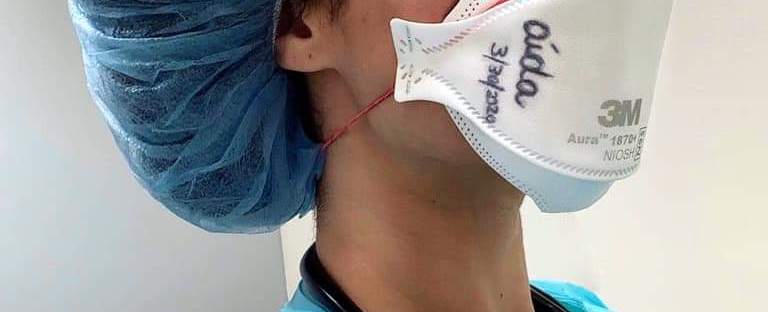
Every day, we write our names and the date on our face masks and eye shields. Every day, we show up stronger, more capable, and braver than the day before. Not just for our patients, but for one another.
My name is Aída. I am an ER nurse. To the nurses all around the world, I feel you. I share your pain. I have your back. I WILL show up for YOU. You are me. I am you. We are each other. Let’s show them our truth.
This is, the Year of the Nurse. Never again will you be, “just a nurse.”🩺🏥💉
Opinions expressed are solely my own and do not express the views or opinions of my employer.
(Photo side memo: Here, the elastic bands of my N95 are not secured yet. Typically, I don’t do this until right before entering a patient’s room since they can be uncomfortable, then double gloving as appropriate. So before I get crucified 🙈)
Everything is energy. What you focus on, you become. What you put out into the universe is always coming back to you in some form. You are so much more than your physical body. You are vibration. You are energy.
Transcript: You Are Energy by Jessica Shepherd
You are energy Do you really understand this? Do you really get HOW you are energy? Energy is flowing through you right now! Energy is around you right now. You are moving in energy You are driving your car in energy You are breathing in and breathing out energy (space for a breathe) Your body is filled with energy The thoughts you are thinking are energy Your feelings are energy, your happiness is energy, your confusion, is energy. The blood that is pumping around your body feeding every cell with oxygen is energy Every part of you that is growing – your hair, your nails, if you’re a little person your limbs use energy to grow. What you eat is energy What you say, – what comes out of your mouth is energy.
What you look at is energy – what you pay attention to gives it more energy. If you watch things on TV you are giving your energy to what you watch. If you listen to or watch things online, you are giving your energy to those things too. You are lining up your energy with those things.
It is your choice what you give your energy to. It is your free will to choose. What are YOU CHOOSING?
What does your energy look like? What does it feel like? Your energy is flowing in directions weather you want it to or not. Your thoughts and your feelings direct your energy. Do you know what happens to your energy when you trust?
When you trust that everything always works out for you. When you trust that you have purpose in this world When you trust that you have more than enough of everything, When you trust you are enough
When you trust that you are worthy of receiving and you have value to give. When you trust that there is more to you than what people see with their eyes When you trust that you are a part of something bigger than you, something that is all knowing, all understanding and most of all loving.
When you trust, you allow, your energy relaxes, your cells relax, the tightness dissipates, the holding dissipates, the searching, the confusion, the disappointment RELAXES.
Your energy relaxes and flows more smoothly when you trust. Suddenly you feel more balanced. Suddenly you feel more worthy, you feel EASIER, happier, you feel more knowing and peaceful
Can you feel it, can you feel how trusting that everything will be ok, trusting that everything works out for you, trusting that you can heal your body, Can you feel how this changes the energy within you?.
I can, I can see your energy smoothing when you say this and eventually believe it. You know believing comes easy with practise. That’s how all you’re other thoughts have turned into beliefs, just with practise.
Practice being kind….rewind. Rewind and take time for yourself. Try this every day for 30 days and see how differently you feel. Feel it coming from your heart. Say it out loud and say it with passion and conviction and belief (even on the days you struggle to hold that belief).
Breathe this in and breathe it out. I trust that everything is working out perfectly for me. I trust in the universe to bring me everything I need I trust that the universe knows fully my plans, my potential, my inner most desires and dreams and I trust that the universe is doing everything it can to help me along my path at the perfect time. I trust that I am worthy of happiness I trust that I am worthy of love I trust that I am of value to this world I trust that I am a powerful creator and that if I can fill myself up with enough great feel good things that the opposite just won’t exist anymore. I trust in my power to heal myself, to know myself, to be able to hear my true self. I trust that my true inner self is speaking to me all the time and I trust that I can hear it. My feelings are the voice that let me know what is going on for my inner self. Not my spiralling rampaging emotions that coupled with thoughts can send me up the garden path, but my true feelings in my heart, the ones that when injected with love tell the real authentic story of the way I am feeling. I trust that I am strong, capable and clever. I trust that I am successful at being me first and foremost and the more in alignment I can be with myself the better everyone around me will feel. I am emanating happiness, peacefulness and joy. I love my life and I enjoy the journey. I AM GREATFUL
EFT is a practical self-help method that involves using the fingers to gently tap on the body’s acupuncture points along the meridian lines of Chinese medicine. It is often referred to as ‘EFT Tapping’ or simply as ‘Tapping’. The therapeutic effects of this technique are recognized around the world.
EFT tapping is an alternative treatment for certain emotional and physical conditions. Some research indicates that it may be effective for anxiety, depression, emotional turmoil, PTSD, and some other conditions.
There have been relatively few studies on EFT, but the body of research has grown in recent years.
In addition to the studies that evaluate EFT on people with both anxiety and depression, other research focuses on EFT for those with depression or PTSD alone.
In a 2013 study, 30 veterans who received EFT treatment along with standard care had significantly less psychological distress and PTSD symptoms than those who were on a waiting list for treatment.
In addition, after three and six sessions, 60.0% and 85.7% of these participants respectively no longer met the PTSD clinical criteria. At 6 months after the treatment, 79.5% of participants did not fit the criteria, which the researchers said indicated the long term benefits of EFT.
In a 2017 survey of EFT practitioners, most (63%) reported that EFT could resolve even complex PTSD in 10 sessions or fewer. Almost 90% of respondents stated that less than 10% of their clients make little or no progress.
More recently, a 2019 study involving 203 individuals tested the physical reactions and psychological symptoms of people attending EFT workshops. The majority of people that took part were women over the age of 50 years.
The researchers reported that participants experienced significant reductions in anxiety, depression, and PTSD symptoms, as well as in pain levels and cravings. They also reported improvements in happiness.
Physical measures in a subset of participants showed improvements in heart rate, blood pressure, and levels of the stress hormone cortisol.
In other research, students with anxiety reported that EFT helped them feel calmer and more relaxed.
In addition, practitioners often combine EFT with other approaches, including cognitive therapy, which may play a role in the treatment’s success
What is EFT and who uses it?
EFT, first came to prominence in the 1990s when developer Gary Craig published information about the therapy on his website EFT International dot org.
It involves tapping specific points on the body, primarily on the head and the face, in a particular sequence, on one or both sides of the body at particular spots. While doing this, the person focuses on the issue that they wish to treat.
As with acupuncture and acupressure, tapping involves the body’s energy meridian points, which are a concept in Chinese medicine. Proponents believe them to be areas of the body through which energy flows.
In this theory, blocks or imbalances in the flow of energy lead to ill health. According to EFT advocates, tapping on these meridian points with the fingertips restores the balance of energy to resolve physical and emotional issues.
It can also work in a similar way to mindfulness, as it can draw a person’s attention to their body and breathing. It may serve as a mental distraction from the issues that are causing anxiety or stress.
People may also be beneficial for a person before an event that they expect to cause stress or anxiety.
To use EFT tapping, follow these five steps:
1. Identify the issue
During this step, the person thinks about the problem that they wish to resolve. They should only choose one issue to focus on at a time.
2. Test the initial intensity
A person should rank the intensity of the issue on a scale of 0–10, with 10 being the worst the issue has ever been. This ranking system allows the person to assess the effectiveness of the tapping at the end of the treatment.
3. The setup
Before beginning each round of tapping, the person should decide on a simple reminder phrase to repeat while tapping the karate chop point. This point is at the center of the fleshy part of the outer hand.
The reminder phrase should acknowledge the issue and convey self-acceptance in spite of it. For example, a person might choose to say:
“Even though I have [issue], I deeply and completely accept myself.”
4. The sequence
During this step, the individual taps on specific points on the body while repeating the phrase that they have chosen. If a practitioner is performing the treatment, they will carry out the tapping.
The tapping points, in sequence, are as follows:
top of the head (TOH) — directly in the center of the top of the head
beginning of the eyebrow (EB) — the beginning of the brow, just above and to the side of the nose
side of the eye (SE) — on the bone at the outside corner of the eye
under the eye (UE) — on the bone under the eye, approximately 1 inch (in) below the pupil
under the nose (UN) — the point between the nose and upper lip
chin point (CH) — halfway between the underside of the lower lip and the bottom of the chin
beginning of the collarbone (CB) — the point where the breastbone (sternum), collarbone, and first rib intersect
under the arm (UA) — at the side of the body, approximately 4 in below the armpit
When tapping, use two or more fingertips and repeat the tap approximately five times on each point.
While some points have a “twin point” on the other side of the body, it is only necessary to tap on one side. However, individuals can tap these points on both sides if both of their hands are free.
5. Test the intensity again
Again, rank the intensity of the issue on a scale of 0–10. Ideally, this will have improved. Repeat the process until the intensity reaches 0 or plateaus.
Slow down a bit and work on not overthinking. Find time to rest your body and your mind. Healing comes with rest and time. Healing also comes from pushing forward and keeping the body and mind moving. The key is learning to set personal limits, boundaries, and pacing yourself.
Set a goal. It doesn’t matter if it is a small goal or a larger more challenging goal. Take small steps towards your goal. Each step is one step closer to achieving the end result, whatever that may be for you. Share yourself with others.
Never give up HOPE and belief in the greater good. Allow yourself to see the light despite all of the darkness.
Someone, somewhere, is sitting in the shade today because someone planted a tree. Pay it forward by planting one small kindness at a time, and help cast the shadow of your fears and limitations behind you.
I wish you enough. Enough love. Enough pain relief. Enough progress. Enough happiness. Enough joy. Enough progress. Enough life. Enough of all that you need in the New Year.
For some people, the idea of improving yourself is motivating. For others, it can be more helpful to think about it as growth. Growth is positive and not always a straight line.
It’s normal to feel like you could be doing more when it comes to self-improvement. But being a better person doesn’t involve being overly hard on yourself. In fact, it’s quite the opposite.
The more self-kindness and self-compassion you can foster, the more equipped you’ll be to treat those around you the same way. Plus, doing good for others can give your life a deeper sense of meaning. It may even help to improve your physical and mental health.
Improving yourself is a very personal journey, and the specifics can change from person to person. It requires putting in the work and being willing to experience discomfort.
Change is uncomfortable. Growth requires stretching past what you know. But every step you take is part of the process toward becoming the best version of yourself.
A life coach can give you a new perspective on self-improvement that you may not have on your own. By working with a coach, you get someone who can help you see yourself more clearly and who is there to help you succeed. You deserve to have someone in your corner.
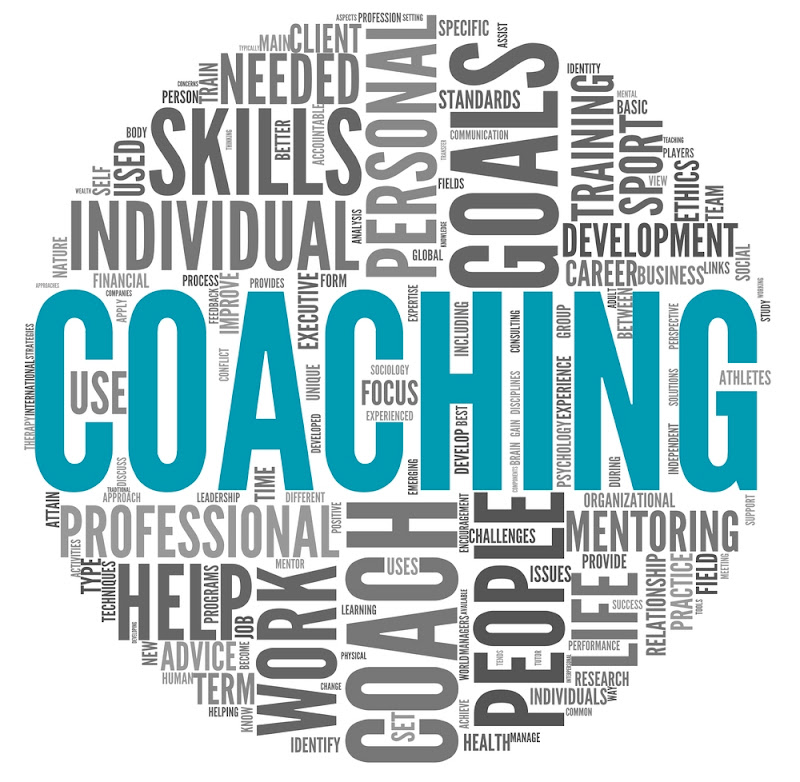
Coaching is an opportunity to maximize your performance. It isn’t about doing what is expected of you, it is about connecting you with your passion, helping you build your life around the things you love, the things you want to grow, and see beyond where you are in the current moment.
Coaching helps raise awareness and responsibility. You are never too old to set another goal or dream another dream. The only distance between your dreams and reality is the action steps you take to get there. You don’t have to be accomplished, all knowing, or great to get started. However, you do need to take the leap, make the step, and actually get started to get to that level of greatness to live the life where you find it harder not to see your worth.
Let coaching help you get from where you are, to where you want to be.
To build a strong team, you must see someone else’s strength as a compliment to your weakness; not a threat to your position or authority ~Christine Caine
Keeping in mind that contrasting lists such as these can be overly sweeping, and not entirely explanatory of the subtleties that exist, here are some of the differences between coaching and therapy.
COACHING is an educational, discovery-based process of human potential. THERAPY is based on the medical model that says people have psychiatric maladies that need to be repaired.
COACHING focuses on self-exploration, self-knowledge, professional development, performance enhancement and better self-management. THERAPY seeks to heal emotional wounds.
COACHING takes clients to the highest levels of performance and life satisfaction. THERAPY seeks to bring clients from a dysfunctional place to a healthy functioning level.
COACHING rarely asks about your childhood or family life. THERAPY continuously explores early-childhood, family and relationship issues.
COACHING uses the terms blockages and obstructions to denote what needs to be removed. THERAPY uses the term “pathology” to describe the “patient’s” issues.
COACHING focuses more on the present and future. THERAPY focuses more on the past and present.
COACHING advances the client’s potential. THERAPY “cures” the patient.
COACHING is used by people who already are succeeding, but who want to succeed even more and at a faster rate. THERAPY is used by people whose lives are not working.
COACHING focuses more on thoughts and behavior and how the client acts and thinks about things. THERAPY focuses more on emotions and how the client feels about things.
COACHING comes out of the human potential movement and the performance world. THERAPY has its roots in the medical model.
COACHING focuses on solving problems in the now. THERAPY explores the historical roots of problems.
COACHING works with the client’s conscious mind. THERAPY focuses on bringing the patient’s unconscious mind into awareness.
COACHING focuses on creating the future. THERAPY seeks to heal the past.
COACHING seeks to bring more power, control and joy to the client. THERAPY seeks to remove the client’s pain.
COACHING assumes a co-equal partnership between coach and client. THERAPY assumes the therapist to be more of the expert, and in control.
COACHING has strategies and objectives. THERAPY has a treatment plan.
COACHING asks “What is next?” THERAPY asks “Why”?
COACHING helps clients design their lives. THERAPY resolves issues.
COACHING takes an active, energetic approach. THERAPY takes a more passive, reflective, background approach.
COACHING focuses on what is possible. THERAPY focuses on what is the problem.
COACHING is goal-oriented, solution-focused and results and action-oriented. THERAPY mainly seeks to increase patient insight, yet some therapists are solution-focused.
COACHING may also utilize feedback from bosses, peers and subordinates. THERAPY usually involves only the patient and therapist.
COACHING takes the client from where they are and helps them move forward. THERAPY examines unfinished emotional business from all stages of life.
No matter what area of your life you want to improve or transform, hiring a life coach ensures you don’t have to do it alone anymore. You are acknowledging that you are willing to and wanting to follow through on your goals while being held accountable for meeting those goals, and ultimately fulfilling your potential.













 “Empowering Health. Inspiring Growth. Transforming Lives.”